
Fuelling & performance nutrition for wrestling and judo
An evidence-based, safety-first guide to fuelling grappling combat sports with weight divisions. For a wrestler or judoka, nutrition is dominated by one hard question that most sports never face: how to make weight without wrecking your body. This covers the real dangers of rapid weight cutting, why the weigh-in window changes everything, how to manage weight gradually, how to rehydrate and refuel once you've weighed in, fuelling repeated matches across a competition day, protein to protect muscle, and the quietly serious risk of under-fuelling. Cautious, honest, and grounded in established sports-nutrition consensus.
Here's the short answer to "how should a wrestling or judo athlete fuel?": the single most important thing is safe weight management: compete close to your natural weight and lose any excess gradually (roughly 0.5–1 kg a week) rather than crash-cutting fluid. Fuel the training itself with enough daily carbohydrate and protein to protect muscle. Rehydrate and refuel hard in whatever window your ruleset allows after the weigh-in. And never treat extreme dehydration as routine. It has killed athletes, and any decision to cut aggressively should be made together with a sports physician or dietitian. Everything below is the detail behind that sentence.
Pair this with the wrestling strength and conditioning guide: it covers the gym work behind making weight safely and competing on tournament day.
On this page
A framing note before anything else. This article deliberately leads with safety, because the biggest nutrition risk in weight-class grappling is not eating the wrong snack: it is the practice of rapid weight cutting itself. Sports nutrition is well studied, but people differ enormously in size, age, body composition, sweat rate, health status and how much fluid they can safely lose and regain. So this is written as can, tends to and around, never as a guarantee, and every specific figure is a population-level guide drawn from published consensus rather than a personal prescription. It is general education rather than medical, dietary or coaching advice, and it is emphatically not a weight-cut plan. Decisions about cutting weight (especially aggressive dehydration) should be made with a qualified professional.
The real subject: making weight
In most sports, "fuelling" means feeding the effort. In wrestling and judo it means that too, but it sits underneath a bigger, sport-defining problem: athletes compete in weight divisions, and many try to compete in a class below their everyday weight, believing a size and strength advantage over lighter opponents outweighs the cost. The result is a deeply ingrained culture of rapid weight loss: dropping body mass fast in the days and hours before a weigh-in, mostly by shedding water. Surveys suggest the majority of grapplers do it: in judo, studies put the proportion using rapid weight-loss methods at roughly 60–90%, and many start young.
This matters because the methods are genuinely dangerous. Rapid cutting typically combines fluid restriction, fasting, and deliberate sweating (training in plastic or rubberised suits, saunas, hot rooms) to force out water. Push it far enough and you get severe dehydration and, in the worst case, dangerous overheating. This is not hypothetical. Over roughly six weeks in late 1997, three previously healthy collegiate wrestlers in the United States died while undergoing extreme rapid-weight-loss regimens: each restricting food and fluid while exercising vigorously in vapour-impermeable suits in hot environments, driving hyperthermia and dehydration. The deaths, documented by the US Centers for Disease Control and Prevention, shocked the sport and prompted the NCAA to change the rules: it introduced weight-certification and minimum body-fat programmes, banned rubber suits, diuretics, laxatives and saunas for cutting, and moved weigh-ins much closer to competition (typically 1–2 hours before) specifically to remove the incentive for a huge overnight dehydration cut.
Why the weigh-in window changes everything
The one variable that most changes how much cutting is even survivable, let alone sensible, is how long you have between the weigh-in and your first match. That gap is set by the ruleset, and it varies wildly:
- Longer window (the day before). Olympic-style judo weighs in the evening before (roughly 12–24 hours out) while some professional combat formats (MMA, boxing, kickboxing) weigh in around 24–36 hours before. That leaves the better part of a day to rehydrate and refuel, which is why cutters in those formats sometimes attempt larger losses.
- Short window (same day, sometimes 1–2 hours). Much of wrestling (and Brazilian jiu-jitsu) weighs in less than 24 hours before, or the morning of, with as little as an hour or two before you step on the mat. There is barely time to put water back.
- References
The logic is unforgiving: the less time you have to recover, the less you can safely cut, because whatever water you sweat off you cannot fully replace before you compete. Combat-sport reviews capture this with acute-loss estimates that tighten as the weigh-in nears competition: a well-nourished athlete might tolerate and recover from a larger loss when the weigh-in is 24–36 hours out, but that safe margin shrinks steeply for a same-day weigh-in. For a morning-of weigh-in, the guidance is to arrange things so you need to lose no more than around 3% of body mass through dehydration at all, and ideally far less. Mild dehydration (under about 2% of body mass) is unlikely to hurt performance. Beyond that, aerobic capacity, strength, skill and thermoregulation increasingly suffer. That is a brutal irony of aggressive same-day cutting: you make weight and then compete depleted.
| Weigh-in to first match | Typical of | Room to rehydrate | Implication for cutting |
|---|---|---|---|
| ~12–24 h (judo) / ~24–36 h (pro MMA/boxing) | Judo (evening before) / many pro formats | Substantial | More recovery time, but not licence for extreme cuts. |
| Under ~24 hours | Some wrestling, BJJ events | Partial | Modest cuts only. Refuel and rehydrate promptly. |
| Same day / 1–2 hours | Much of scholastic & collegiate wrestling | Minimal | Aim to arrive at weight naturally. Dehydration is riskiest here. |
Making weight the safe way
If a cut is unavoidable, the safe version starts weeks out, long before the final hours. The principle endorsed across combat-sport nutrition guidance is to do the bulk of the work slowly, through a modest energy deficit during the training block, so that by fight week you are close enough to your class to need little or no dehydration. Position-stand guidance for combat athletes suggests aiming to lose roughly 0.5–1 kg of body mass per week during camp: a rate slow enough to strip fat while largely sparing muscle and avoiding the performance crater of a crash diet.
Crucially, "gradual" does not mean starving. Even while losing weight, the same guidance advises keeping carbohydrate from dropping below about 3–4 g per kilogram of body weight per day so training quality holds up, with something like 4–5 g/kg/day a reasonable starting point in general preparation and more on the hardest days. The goal of gradual management is to protect the two things extreme cutting destroys: your training in the weeks before, and your readiness on the day.
After the weigh-in: rehydrate and refuel
The moment the scale reads clear, the job flips from losing to recovering, and how much you can undo depends entirely on how many hours the ruleset gives you. Two things need restoring: the water and salts you sweated off, and the glycogen (stored carbohydrate) you burned or restricted. Guidance for combat athletes is specific:
- Rehydrate with sodium alongside the fluid. Plain water alone tends to run straight through you. The recommendation is an oral rehydration solution at roughly 1–1.5 litres per hour, carrying around 50–90 mmol/L of sodium (much saltier than an ordinary sports drink), and to drink somewhat more than you lost (about 125–150% of the fluid deficit) because your kidneys keep producing urine as you rehydrate. Sipping steadily beats gulping.
- Refuel carbohydrate. To restock glycogen, guidance describes taking in around 4–7 g of carbohydrate per kilogram of body weight after a modest cut, rising toward 8–12 g/kg if you had significantly depleted glycogen during fight week, favouring fast-acting, easily digested carbohydrate, and keeping the rate tolerable (roughly up to 60 g per hour) so your gut copes. Carbohydrate-rich fluids do double duty here, helping both rehydration and refuelling.
With a long window you can genuinely reverse a lot of a cut. With a same-day weigh-in you cannot, which loops straight back to the core lesson: the smaller the cut, the less there is to reverse, and the better you compete.
Fuelling the matches themselves
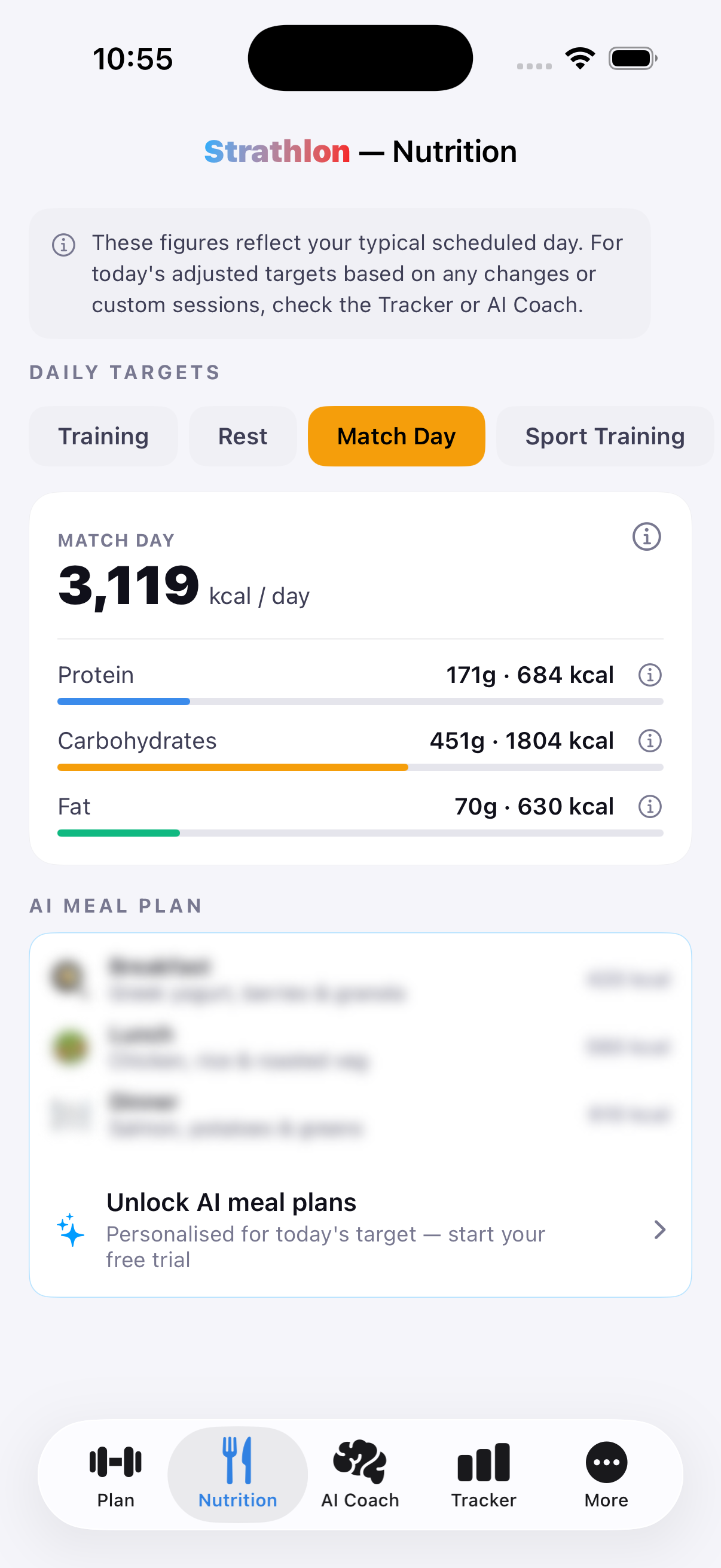
Wrestling and judo are high-intensity intermittent sports. A judo contest runs on the order of four minutes and a wrestling bout around six, but the intensity inside those minutes is ferocious: repeated explosive grip fights, throws, scrambles and holds that lean heavily on carbohydrate (muscle glycogen) rather than on the slow-burning fat that fuels a long run. Because the efforts are short, you are not sipping gels mid-match the way a marathoner does. The fuelling challenge is different. It is about arriving well stocked and topping up between bouts.
A competition day typically stacks several matches with unpredictable gaps. Each bout draws down glycogen, so the athlete who started the day fully fuelled (and tops up with easily digested carbohydrate and fluid in the gaps) tends to be as sharp in the final as in the first round, while the depleted, dehydrated cutter fades. Keep between-match food small and familiar so it does not sit heavily before you compete again. This is one of the strongest practical arguments against extreme cutting: a body that made weight by emptying its fuel and water stores has nothing left to give over a long day. Because glycogen turns over across the day, match-day fuelling is really just an extension of your daily carbohydrate habit.
Protein: protecting lean mass
When you diet to make weight, the danger is losing muscle along with fat: exactly the opposite of what a grappler wants. This is where protein earns its place. Eating in an energy deficit raises protein needs, because adequate protein plus resistance training is what tells the body to hold onto lean tissue while it sheds fat.
General athletic protein guidance suggests around 1.6–2.2 g of protein per kilogram of body weight per day (within a broader athletic range of about 1.2–2.4 g/kg). Reviews focused specifically on lean athletes dieting down go further: to best preserve muscle during a deficit, they suggest roughly 1.8–2.7 g/kg of body weight, or, expressed against lean tissue, about 2.3–3.1 g per kilogram of fat-free mass per day, higher the leaner and more aggressive the cut. Spread it across the day's meals rather than piling it into one, and pair it with your strength work. The broader picture (energy, carbohydrate, fats and food quality) is covered in the eating-for-results guide.
Under-fuelling, RED-S and young athletes
Repeated cutting and chronic dieting make weight-class grappling one of the sports most exposed to low energy availability: not leaving enough energy, once training is paid for, to run the body's basic functions. Sports scientists quantify this as energy availability: energy eaten minus energy burned in exercise, expressed per kilogram of fat-free (lean) mass. Research associates falling below about 30 kcal per kg of fat-free mass per day with a cascade of problems, while something nearer 45 kcal/kg FFM/day is considered healthy for an exercising body.
Sustained low energy availability is the root of what the International Olympic Committee calls Relative Energy Deficiency in Sport (RED-S): a syndrome affecting both men and women that can impair bone health, hormones, immunity, metabolism, mood, concentration and (the point every competitor should note) performance itself. The warning signs are worth knowing: recurrent illness or injury, stress fractures, stalled or declining performance despite hard training, poor sleep, low mood, and, in women, disrupted or absent periods. None are things to push through. The answer is usually to eat more, with help from a sports physician or dietitian. Training or cutting harder makes things worse.
A specific word on young athletes, because grappling starts early and so does cutting. Restricting energy and fluid during the years of growth and puberty is a particular concern: it can affect development and carries greater health risk than in a mature adult. For children and teenagers, the sensible default is to compete at their natural weight and steer well clear of dehydration cutting altogether, with any weight concerns handled by a professional who knows the young athlete.
Common questions
Is cutting weight for wrestling or judo safe?
It can be done more safely, but rapid weight cutting through dehydration carries real, documented danger: three collegiate wrestlers died within about six weeks in late 1997 during extreme dehydration regimens, which prompted major rule changes. The safest approach is to compete close to your natural weight and to lose most of any excess gradually over the training block: combat-sport guidance suggests around 0.5–1 kg per week, rather than crash-cutting fluid in the last days. Aggressive dehydration to make a lower class is a decision to take together with a sports physician or dietitian.
How much weight can I safely cut before a weigh-in, and how fast?
There is no universally safe amount, and it depends heavily on how long you have to recover afterwards. Combat-sport reviews describe the acute body-mass loss a well-nourished athlete might tolerate as shrinking the closer the weigh-in sits to competition: on the order of a few per cent at 24 hours, and less again for same-day weigh-ins. Mild dehydration under about 2% of body mass is unlikely to hurt performance. Larger cuts increasingly do. The core principle is to arrive needing to shed as little water as possible, which comes from managing weight gradually beforehand rather than crash-cutting at the end.
What should I do in the window between weigh-in and competing?
Rehydrate and refuel deliberately. Guidance for combat athletes is to prioritise fluids with sodium (oral rehydration solutions at roughly 1–1.5 litres per hour, carrying around 50–90 mmol/L of sodium) and to drink somewhat more than the fluid you lost (about 125–150%) to offset ongoing urine losses. Alongside that, take in carbohydrate to restock glycogen: often around 4–7 g per kilogram of body weight after a modest cut, more after a heavy one, using fast-acting, easily digested carbohydrate at a comfortable rate. How much you can undo depends entirely on how many hours you have.
How do I fuel for several matches in one day?
Tournaments stack multiple short, very intense bouts across a day, and each one draws on carbohydrate stored as muscle glycogen. Between matches, focus on easily digested carbohydrate and fluid to top up, keeping portions small enough not to sit heavily before you compete again. Going into the day with well-stocked glycogen, built from adequate daily carbohydrate, is what lets you perform as well in the last match as the first. A depleted, crash-cut body cannot. This is one of the strongest arguments against extreme cutting: an emptied, dehydrated body tends to fade over a long competition day.
How much protein do I need to keep muscle while making weight?
When you are eating in a deficit to lose weight, protein needs rise to protect lean mass. General athletic protein guidance suggests around 1.6–2.2 g per kilogram of body weight per day, and reviews of lean athletes dieting down support going higher still (roughly 1.8–2.7 g/kg of body weight, or about 2.3–3.1 g/kg of fat-free mass) to best preserve muscle while losing fat. Spread it across the day's meals and pair it with resistance training. Protein is the nutrient you protect when calories are tight.
Does it matter whether the weigh-in is the day before or the morning of?
It matters a great deal. Judo and other day-before formats weigh in the evening before (roughly 12–24 hours out) leaving time to rehydrate and refuel, and some professional MMA or boxing formats give even longer, around 24–36 hours. Others (including much of wrestling and Brazilian jiu-jitsu) weigh in less than a day before, or the same morning, with sometimes only an hour or two to recover. The shorter that window, the less water you can safely put back, so the more dangerous an aggressive cut becomes. With a same-morning weigh-in, the sensible aim is to need almost no dehydration at all: arriving at or very near weight naturally.
Takeaways
- The core issue is safe weight-making. Rapid dehydration cutting is dangerous: it has caused deaths and reliably degrades performance. Treat it as a medical matter.
- The weigh-in window decides the risk. A day-before window gives room to recover. A same-day or morning weigh-in gives almost none, so aim to arrive at weight naturally when the window is short.
- Make weight gradually. Do the bulk of any cut over weeks at roughly 0.5–1 kg/week, keeping carbohydrate around 3–5 g/kg/day so training and readiness hold up.
- Rehydrate and refuel with intent. After weigh-in, use a sodium-rich oral rehydration solution (~1–1.5 L/h, ~50–90 mmol/L sodium, ~125–150% of losses) plus fast carbohydrate (~4–7 g/kg, more after a big cut).
- Fuel for repeated bouts. Arrive with full glycogen and top up with easy carbohydrate between matches. A depleted, dehydrated body fades over a competition day.
- Protect muscle with protein. In a deficit aim for about 1.6–2.2 g/kg/day, up to ~1.8–2.7 g/kg (≈2.3–3.1 g/kg fat-free mass) to preserve lean mass, paired with strength work.
- Guard against under-fuelling. Chronic cutting risks low energy availability and RED-S (below ~30 vs a healthy ~45 kcal/kg fat-free mass/day), harming bone, hormones, health and performance, especially in young athletes.
- When in doubt, eat more and cut less. Sustainable grappling is built on competing near your real weight. Winning the weigh-in is a poor substitute.
If you remember one thing, make it this: in wrestling and judo the athlete who fuels well is the one who never needs a dramatic cut, who competes near their natural weight, loses any excess slowly and fuelled, and steps onto the mat hydrated and full of energy. Strathlon's job is to keep that base honest by adjusting your targets around the training you actually log, so the everyday fuelling that underpins safe weight management is one less thing to guess at.
References
Numbered sources for the specific figures, effect sizes and named studies above. Where a claim reflects agreed guidance rather than a single trial, the citation is to the position stand or consensus statement of the body concerned, with the country or international remit named. Wrestling's nutrition literature is dominated by weight-making, and so is this guide; the cutting, rehydration and refeed figures below are cited to combat-sport research and to the ACSM's consensus statement on weight-category sports.
- Kafkas ME, Taşkiran C, Şahin Kafkas A, Özen G, Taşkapan Ç, Özyalin F, et al. Acute physiological changes in elite free-style wrestlers during a one-day tournament. The Journal of Sports Medicine and Physical Fitness. 2016;56(10):1113–1119. Study of acute physiological changes in elite freestyle wrestlers during a one-day tournament: the source for the between-bouts refuelling demand. PubMed 26558832
- Reale R, Slater G, Burke LM. Acute-Weight-Loss Strategies for Combat Sports and Applications to Olympic Success. International Journal of Sports Physiology and Performance. 2017;12(2):142–151. Review of acute weight-loss strategies in combat sports and their application to Olympic success, the anchor for the weight-making section. PubMed 27347784
- Marten AD, Mattin MD, Rumps MV, Saraf SM, Mulcahey MK. Effects of Rapid Weight Loss in Male and Female Wrestlers. Journal of Strength and Conditioning Research. 2025;39(5):e721–e729. Review of the effects of rapid weight loss in male and female wrestlers, the sport-specific version of the same. PubMed 40266645
- Matthews JJ, Stanhope EN, Godwin MS, Holmes MEJ, Artioli GG. The Magnitude of Rapid Weight Loss and Rapid Weight Gain in Combat Sport Athletes Preparing for Competition: A Systematic Review. International Journal of Sport Nutrition and Exercise Metabolism. 2019;29(4):441–452. Systematic review of the magnitude of rapid weight loss and rapid weight gain in combat-sport athletes preparing for competition. PubMed 30299200
- Hammer E, Sanfilippo JL, Johnson G, Hetzel S. Association of in-competition injury risk and the degree of rapid weight cutting prior to competition in division I collegiate wrestlers. British Journal of Sports Medicine. 2023;57(3):160–165. Study associating in-competition injury risk with the degree of rapid weight cutting in collegiate wrestlers: the injury cost of an aggressive cut. PubMed 36261252
- Lakicevic N, Paoli A, Roklicer R, Trivic T, Korovljev D, Ostojic SM, et al. Effects of Rapid Weight Loss on Kidney Function in Combat Sport Athletes. Medicina. 2021;57(6). Study of the effects of rapid weight loss on kidney function in combat-sport athletes, the health end of the same argument. PubMed 34072641 · PMC8229569 full text
- Marttinen RH, Judelson DA, Wiersma LD, Coburn JW. Effects of self-selected mass loss on performance and mood in collegiate wrestlers. Journal of Strength and Conditioning Research. 2011;25(4):1010–5. Study of self-selected mass loss on performance and mood in collegiate wrestlers, the performance cost. PubMed 21399531
- Reale R, Slater G, Cox GR, Dunican IC, Burke LM. The Effect of Water Loading on Acute Weight Loss Following Fluid Restriction in Combat Sports Athletes. International Journal of Sport Nutrition and Exercise Metabolism. 2018;28(6):565–573. Randomised trial of water loading for acute weight loss following fluid restriction, cited where a cut is unavoidable. PubMed 29182412
- Reljic D, Feist J, Jost J, Kieser M, Friedmann-Bette B. Rapid body mass loss affects erythropoiesis and hemolysis but does not impair aerobic performance in combat athletes. Scandinavian Journal of Medicine & Science in Sports. 2016;26(5):507–17. Study of rapid body-mass loss on erythropoiesis and haemolysis in combat-sport athletes, cited in the recovery discussion. PubMed 25916419
- Burke LM, Slater GJ, Matthews JJ, Langan-Evans C, Horswill CA. ACSM Expert Consensus Statement on Weight Loss in Weight-Category Sports. Current Sports Medicine Reports. 2021;20(4):199–217. ACSM expert consensus statement on weight loss in weight-category sports, the governing guidance this guide follows. PubMed 33790193
- Thomas DT, Erdman KA, Burke LM. Position of the Academy of Nutrition and Dietetics, Dietitians of Canada, and the American College of Sports Medicine: Nutrition and Athletic Performance. Journal of the Academy of Nutrition and Dietetics. 2016;116(3):501–528. Joint position of the Academy of Nutrition and Dietetics, Dietitians of Canada and the American College of Sports Medicine: the umbrella source for the daily energy, carbohydrate and protein ranges used throughout. PubMed 26920240
- Burke LM, Hawley JA, Wong SH, Jeukendrup AE. Carbohydrates for training and competition. Journal of Sports Sciences. 2011;29 Suppl 1:S17–27. Burke and colleagues on carbohydrate for training and competition, the source for the g/kg/day carbohydrate targets matched to training load. PubMed 21660838
- Jeukendrup A. A step towards personalized sports nutrition: carbohydrate intake during exercise. Sports Medicine. 2014;44 Suppl 1(Suppl 1):S25–33. Jeukendrup on personalising carbohydrate intake during exercise: the source for the g/h feeding rates and the duration at which they start to matter. PubMed 24791914 · PMC4008807 full text
- Jäger R, Kerksick CM, Campbell BI, Cribb PJ, Wells SD, Skwiat TM, et al. International Society of Sports Nutrition Position Stand: protein and exercise. Journal of the International Society of Sports Nutrition. 2017;14:20. International Society of Sports Nutrition (ISSN, United States) position stand on protein and exercise, the source for the daily protein range and per-meal distribution. PubMed 28642676 · PMC5477153 full text
- Schoenfeld BJ, Aragon AA. How much protein can the body use in a single meal for muscle-building? Implications for daily protein distribution. Journal of the International Society of Sports Nutrition. 2018;15:10. Schoenfeld and Aragon on how much protein the body can use in a single meal, the basis for the per-feed figure quoted. PubMed 29497353 · PMC5828430 full text
- Burke LM, van Loon LJC, Hawley JA. Postexercise muscle glycogen resynthesis in humans. Journal of Applied Physiology. 2017;122(5):1055–1067. Review of post-exercise muscle glycogen resynthesis, the source for the refuelling rates and for when a fast refuel is actually needed. PubMed 27789774
- Sawka MN, Burke LM, Eichner ER, Maughan RJ, Montain SJ, Stachenfeld NS. American College of Sports Medicine position stand. Exercise and fluid replacement. Medicine and Science in Sports and Exercise. 2007;39(2):377–90. ACSM position stand on exercise and fluid replacement: the source for the under-2% body-mass-loss guideline and the sweat-rate method. PubMed 17277604
- Barnes KA, Anderson ML, Stofan JR, Dalrymple KJ, Reimel AJ, Roberts TJ, et al. Normative data for sweating rate, sweat sodium concentration, and sweat sodium loss in athletes: An update and analysis by sport. Journal of Sports Sciences. 2019;37(20):2356–2366. Normative data for sweating rate and sweat sodium concentration in athletes, the source for how widely fluid and sodium losses vary between individuals. PubMed 31230518
- Hew-Butler T, Rosner MH, Fowkes-Godek S, Dugas JP, Hoffman MD, Lewis DP, et al. Statement of the Third International Exercise-Associated Hyponatremia Consensus Development Conference, Carlsbad, California, 2015. Clinical Journal of Sport Medicine : Official Journal of the Canadian Academy of Sport Medicine. 2015;25(4):303–20. Third International Exercise-Associated Hyponatremia Consensus statement, the basis for the warning against drinking well beyond sweat losses. PubMed 26102445
- Guest NS, VanDusseldorp TA, Nelson MT, Grgic J, Schoenfeld BJ, Jenkins NDM, et al. International society of sports nutrition position stand: caffeine and exercise performance. Journal of the International Society of Sports Nutrition. 2021;18(1):1. ISSN position stand on caffeine and exercise performance, the source for the caffeine dose and timing guidance. PubMed 33388079 · PMC7777221 full text
- Kreider RB, Kalman DS, Antonio J, Ziegenfuss TN, Wildman R, Collins R, et al. International Society of Sports Nutrition position stand: safety and efficacy of creatine supplementation in exercise, sport, and medicine. Journal of the International Society of Sports Nutrition. 2017;14:18. ISSN position stand on the safety and efficacy of creatine supplementation, cited where creatine is relevant to the sport's demands. PubMed 28615996 · PMC5469049 full text
- Maughan RJ, Burke LM, Dvorak J, Larson-Meyer DE, Peeling P, Phillips SM, et al. IOC consensus statement: dietary supplements and the high-performance athlete. British Journal of Sports Medicine. 2018;52(7):439–455. IOC consensus statement on dietary supplements and the high-performance athlete: the framing for treating supplements as optional extras. PubMed 29540367 · PMC5867441 full text
- Mountjoy M, Ackerman KE, Bailey DM, Burke LM, Constantini N, Hackney AC, et al. 2023 International Olympic Committee's (IOC) consensus statement on Relative Energy Deficiency in Sport (REDs). British Journal of Sports Medicine. 2023;57(17):1073–1097. The 2023 IOC consensus statement on Relative Energy Deficiency in Sport, the source for the consequences of under-fuelling a training load. PubMed 37752011
- Aragon AA, Schoenfeld BJ. Nutrient timing revisited: is there a post-exercise anabolic window?. Journal of the International Society of Sports Nutrition. 2013;10(1):5. Aragon and Schoenfeld on the post-exercise anabolic window, the source for timing mattering far less than daily totals. PubMed 23360586 · PMC3577439 full text
- British Dietetic Association (BDA, United Kingdom). Sport and exercise nutrition: Food Fact Sheet. British Dietetic Association (BDA, United Kingdom) Food Fact Sheet on sport and exercise nutrition, the practical UK dietetic framing. BDA Food Fact Sheet
This is general educational information rather than medical, dietary or coaching advice. The figures here are drawn from established sports-nutrition consensus and framed as population-level guides: individual needs vary widely with body size, age, body composition, conditions and health. Rapid weight loss and dehydration carry real risk; decisions about making weight, and any aggressive cut, should be made with a sports physician or registered dietitian rather than alone. Anyone who is a young or growing athlete, is pregnant or postpartum, has a health condition or a history of disordered eating, or who suspects under-fuelling, stress fractures, menstrual disruption or RED-S, should seek professional help before making changes. See our Terms for more.
← All guides · Wrestling strength and conditioning · Fuelling for BJJ · Fuelling for MMA · Fuelling for boxing · Eating for results · Understanding your stats · Home