
Fuelling & performance nutrition for cycling
An evidence-based guide to fuelling the cyclist's body. Cycling is, like running, a story about a single fuel (muscle glycogen), and about not running out of it on a long ride. But it comes with a gift most endurance sports don't: you can eat and drink while you go, comfortably, for hours. This covers daily carbohydrate, the pre-ride meal, how much to take in on longer rides and races, carbohydrate loading, hydration by your own sweat rate, training your gut, recovery, and the quietly serious risk of chronic under-fuelling in lean riders. Practical, honest, and grounded in established sports-nutrition consensus.
Here's the short answer to "how should a cyclist fuel?": build the base with enough daily carbohydrate, top up before you ride, take in carbohydrate and fluid on rides longer than about an hour (roughly 30–60 g of carbs per hour, rising toward 90 g for long rides and races), and refuel and rehydrate afterwards, all while eating enough overall to avoid running an energy deficit.[1] The bike makes the "during" part easier than almost any other sport. Everything below is the detail behind that sentence, and how to make it work for your body rather than someone else's.
Pair this with the cycling strength and conditioning guide for the training side: the off-bike strength work that improves economy, sprint power and the position you hold for hours.
On this page
- Why cycling is a glycogen sport
- Daily carbohydrate: the base
- Before the ride: the pre-ride meal
- On the bike: carbs per hour
- Carbohydrate loading before long events
- Fluid, sweat rate and hydration
- Training your gut
- Recovery: carbohydrate and protein
- Under-fuelling, bone health and RED-S
- Common questions
- Takeaways
- References
A framing note before the numbers. Sports nutrition is well studied, but people differ enormously: body size, riding intensity, fitness, the weather, gut tolerance, sex and health status all shift what's right on the day. So this is written as can, tends to and around, never as a guarantee, and every specific figure is a population-level guide drawn from published consensus rather than a personal prescription. It's general education rather than medical or dietary advice, and it isn't a personalised plan.
Why cycling is a glycogen sport
Your body rides on a blend of two main fuels: fat and carbohydrate. Fat is almost limitless even in a lean rider, but it burns slowly. Carbohydrate, stored as glycogen in muscle and liver plus glucose in the blood, burns fast and cleanly, and it's the fuel that lets you push real watts. The catch is that carbohydrate stores are small. Set against fat stores of some 80,000–100,000 kcal, the German Nutrition Society's sports-nutrition position puts muscle glycogen at roughly 1,230–2,050 kcal and liver glycogen at around 410 kcal: full stores worth about 75–90 minutes of exercise.[2]
The harder you ride, the more you lean on carbohydrate rather than fat. That's the whole reason fuelling matters more for a long ride than for a gentle spin: at race or tempo intensity you're spending glycogen quickly, and when the tank empties (the classic "bonk" or "hunger knock" that hollows out a rider's legs on the last climb of a big day), power collapses. That's not muscle damage. It's the fast fuel running out. In the classic experiment, trained cyclists riding at 71% of VO2max fatigued after about three hours on a placebo drink, with blood glucose falling as they did. Fed carbohydrate instead, they held their blood glucose and rode a further hour.[3] The entire fuelling strategy below exists to do one of two things: start with more glycogen, and top it up as you go so you reach the finish before the tank does. Cycling's advantage is that the "top it up as you go" part is unusually practical. More on that below.
Daily carbohydrate: the base
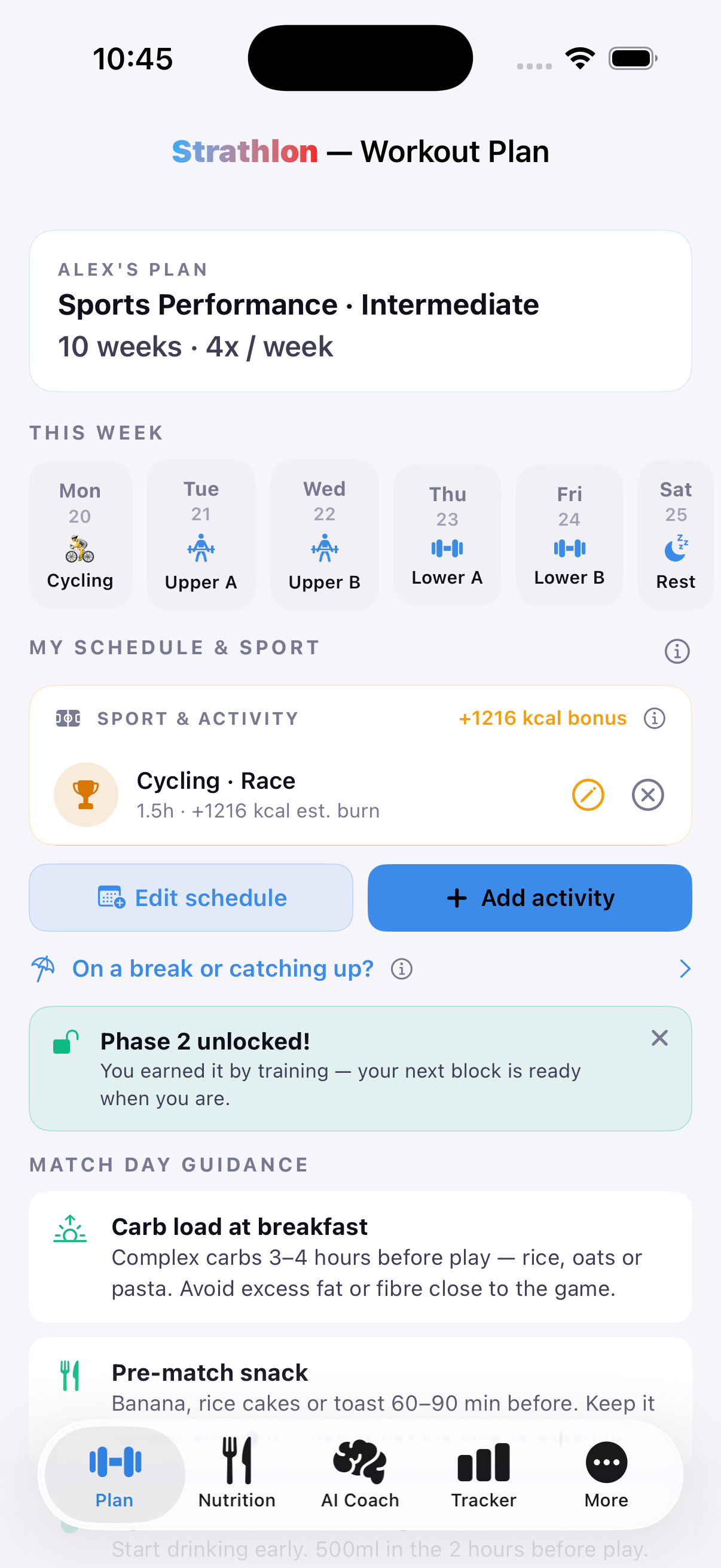
Ride-day fuelling only works if you show up with the tank reasonably full, and that comes from your everyday carbohydrate intake, matched to your training. The joint position on nutrition and athletic performance from the Academy of Nutrition and Dietetics, Dietitians of Canada and the American College of Sports Medicine sets out daily carbohydrate targets scaled to training load: around 5–7 g of carbohydrate per kilogram of body weight per day for a general or moderate program (about an hour a day), roughly 6–10 g/kg/day for the moderate-to-high volumes of a serious cyclist training one to three hours a day, and up to 8–12 g/kg/day for the very high volumes of a rider doing four to five hours of moderate-to-hard riding daily.[1] The International Society of Sports Nutrition frames the same idea as a broad 5–12 g/kg/day band, reserving the upper end (8–10 g/kg/day) for athletes training at moderate-to-high intensities upwards of 12 hours a week.[7]
The practical point is that these dials should move with your week. A big long-ride or interval day warrants more carbohydrate than an easy or rest day. Chronically eating at the low end while training hard is one of the most common ways cyclists end up flat, under-recovered and stuck: the base is too empty for the quality fuelling on top to matter.
Before the ride: the pre-ride meal
For an easy or short ride you often need nothing special. Before longer or harder rides, and before events, a carbohydrate-focused top-up helps ensure liver and muscle glycogen are high at the start. The overnight fast, in particular, drains liver glycogen, so a morning ride benefits from breakfast. Position stands describe a pre-exercise meal or snack of roughly 1–4 g of carbohydrate per kilogram of body weight, eaten around one to four hours beforehand, with the larger amounts earlier when you have time to digest, the smaller amounts closer to roll-out.[1]
The gram target is the simple part. Tolerance is where the skill lies. Favour familiar, lower-fibre and lower-fat carbohydrate you've rehearsed in training (porridge, toast, a banana, a bagel, rice) because low-fat, low-fibre choices are less prone to cause gut problems and empty from the stomach more readily.[1] The golden rule of event morning is to try nothing new: the meal, the coffee, the timing should all be things your gut has already met on a long training ride.
On the bike: carbs per hour
This is where cycling nutrition earns its keep, and where the sport has a genuine edge. Once a ride pushes past roughly an hour, taking in carbohydrate during the effort helps maintain blood glucose and spares your limited glycogen, delaying fatigue. How much depends mostly on how long and how hard you'll be riding. The joint position stand and wider consensus give a duration-scaled ladder[1][4]:
| Ride / race duration | Carbohydrate per hour | Type of carbohydrate | Why |
|---|---|---|---|
| Under ~45–60 min | Little or none | None | Your existing glycogen covers it. Fuelling is optional. |
| ~45–75 min, hard | Small amounts / mouth rinse | Single source fine | Even a carbohydrate mouth rinse can help. Little needs swallowing.[9] |
| ~1–2.5 hours | ~30–60 g | Single source fine | Maintains blood glucose, well within what one carb can be absorbed. |
| >~2.5–3 hours | Up to ~90 g | Multiple transportable | To absorb this much you need glucose + fructose together. |
The jump from 60 to 90 g per hour hides an important piece of physiology. The gut can only move a single type of carbohydrate (like glucose or maltodextrin) across the intestinal wall at a rate that tops out near 60 g per hour, because the SGLT1 transporter that carries glucose saturates at about that intake.[10] But glucose and fructose use different transporters, so combining them (typically in roughly a 2:1 glucose-to-fructose ratio) lets the body absorb and burn carbohydrate faster, up to around 90 g per hour.[10] In trained cyclists, glucose at 1.2 g/min plus fructose at 0.6 g/min raised peak oxidation of the ingested carbohydrate to 1.26 g/min, about 55% higher than glucose alone.[11] That's why modern high-carb gels, drink mixes and chews advertise a "2:1" or similar blend: it's not marketing, it's the transporter maths that lets a cyclist fuel aggressively on a long ride without the gut shutting down.
Here is where cycling differs from running. Gut symptoms during exercise are reported more often in runners than in cyclists, which reviewers attribute largely to the repetitive high-impact mechanics of running and the damage it does to the intestinal lining.[12] You also carry bottles and stuff your pockets, so you can sip and snack almost continuously rather than grabbing what an aid station hands you. It shows up in the field data: across a survey of competitive endurance events, riders in a 100/150 km road race averaged about 53 g of carbohydrate per hour against about 35 g/h for marathon runners.[13]
That has fed a push beyond 90 g/h. In highly trained cyclists, taking in 120 g per hour as a fructose-heavier blend did raise oxidation of the ingested carbohydrate compared with 90 g/h, but it produced no extra sparing of the body's own carbohydrate stores.[14] A 2026 review of the professional peloton's high-carbohydrate fuelling (defined as 100 g/h or more) concluded that, across the small number of experiments comparing it with 60–90 g/h, there is not yet clear evidence it improves performance, though the trials have not closely mimicked the demands of a multi-day or multi-week stage race, where the review argues a benefit is more likely.[15] So treat the top of the ladder as a frontier for well-adapted long-course riders. It isn't a starting point.
Two practical notes. First, drinks, gels, chews and real food are interchangeable ways to hit the target: pick whichever your stomach and the ride support, since the grams matter more than the format. Second, these are ceilings you build up to over weeks, well beyond what you'd take on day one. New riders and those on shorter rides should sit at the lower end. Only long-course athletes need the top of the ladder, and only after training their gut to handle it (below).
Carbohydrate loading before long events
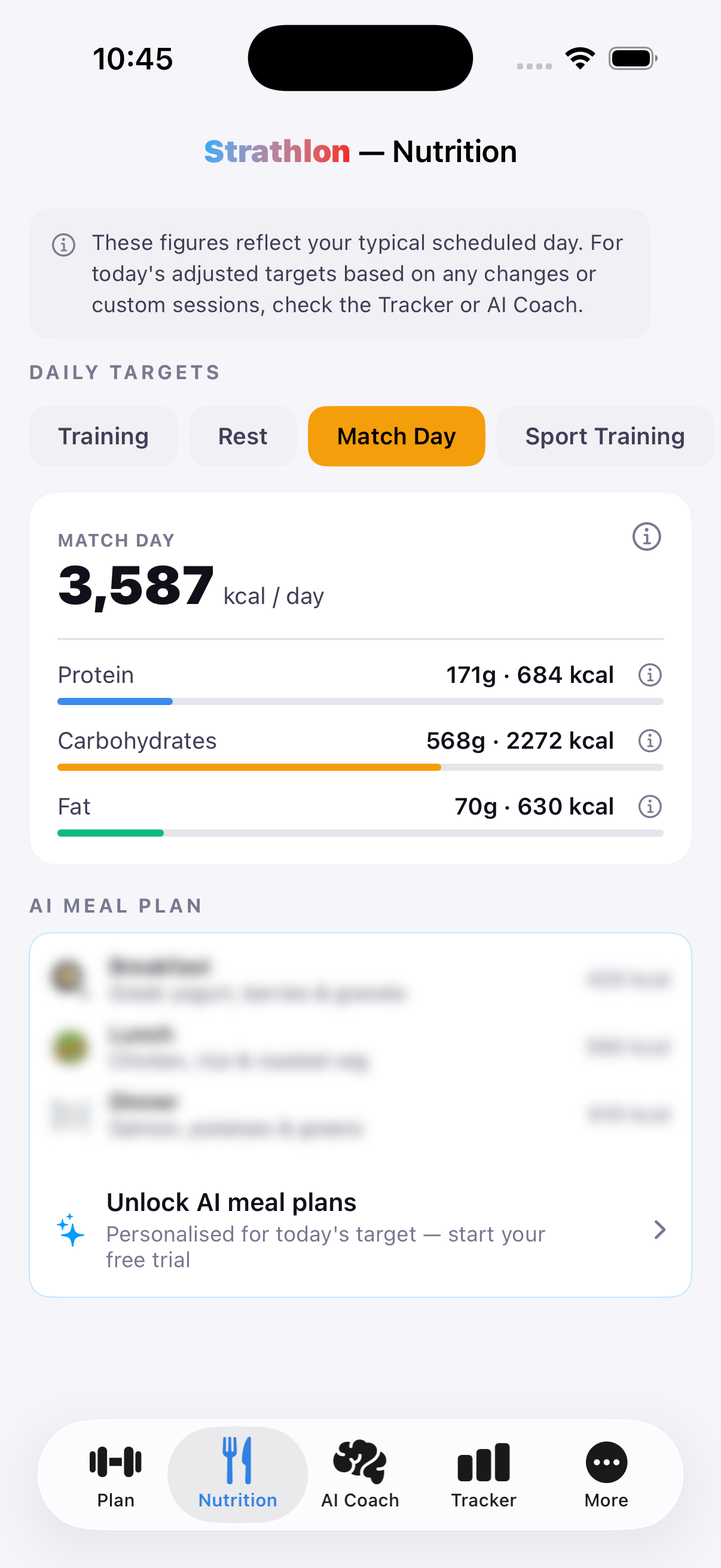
For events that last longer than about 90 minutes (a long sportive, a gran fondo, a road race, the hard stages of a tour), starting with maximally full glycogen stores can meaningfully delay fatigue.[1][2] This is carbohydrate loading, and the science behind it goes back to the 1960s, when researchers showed that a glycogen-depleting effort followed by a high-carbohydrate diet could lift muscle glycogen far above its normal level, a phenomenon called supercompensation. A 2025 meta-analysis of the studies since puts the average gain after glycogen-depleting cycling plus three to five high-carbohydrate days at about 270 mmol per kg of dry muscle, roughly three-quarters again on top of typical resting stores.[16]
The old, brutal "depletion" protocols have been replaced by something far gentler. Contemporary guidance describes eating around 10–12 g of carbohydrate per kilogram of body weight per day for the 36–48 hours before the event, while simultaneously tapering training so you're not burning off what you're storing.[1][2] There's no need to starve yourself of carbs first. In trained athletes, extending a carbohydrate-rich diet and tapering over 48 hours is enough.[1] Expect the scale to rise a kilo or two: muscle biopsies taken after prolonged cycling in the heat confirmed the long-held notion that each gram of glycogen is stored with at least three grams of water[17]. That gain is fuel and hydration. It isn't fat, and it will help you on the day.
Fluid, sweat rate and hydration
Cycling generates a lot of heat, and sweating is how you shed it, which means you're always losing fluid, sometimes a lot, though the airflow of riding can hide just how much. Significant dehydration (losing more than roughly 2% of body mass as sweat) can compromise performance. The long-standing guidance from the American College of Sports Medicine's position on exercise and fluid replacement is to drink enough to keep body-mass loss under about 2% over a long effort, and, because sweat rates and sweat electrolyte content vary so much between people, to use a customised fluid plan rather than a rigid schedule.[18]
There's no universal ml-per-hour number, because sweat rates vary enormously: the joint position stand puts them at roughly 0.3 to 2.4 litres per hour depending on intensity, duration, fitness, heat acclimatisation, altitude and conditions.[1] As a working guide, the fluid plan that suits most athletes and events works out at about 0.4 to 0.8 litres per hour, customised to your own tolerance and drinking opportunities.[1] Conveniently, the bike carries your bottles for you, so hitting these numbers is far easier than on foot: the limiter is usually remembering to drink. Being able to rarely is the issue. The most reliable way to find your own number is to weigh yourself before and after a long ride in representative conditions: a kilogram of body mass lost represents roughly a litre of sweat, which tells you how much you're under-replacing and how much to aim for next time.[1]
Sodium should be taken on when large sweat sodium losses are likely: high sweat rates (above about 1.2 litres an hour), "salty sweat", or exercise lasting more than two hours. Dietary sodium also helps you retain the fluid you drink, and riders who sweat heavily with a high sweat sodium concentration appear to be at greater risk of cramp, particularly when they aren't acclimatised to the heat, though cramps are typically driven by muscle fatigue rather than by salt alone.[1] Conveniently, the same drink mixes that deliver carbohydrate usually carry sodium too, so on the bike your bottle can do double duty as fuel and hydration.
Training your gut
Here's the piece most riders skip. Taking in 60–90 g of carbohydrate an hour while riding hard is a skill the gut has to learn. It isn't a switch you flip on event day. The intestine can be trained: a high-carbohydrate diet increases both the density and the activity of the SGLT1 transporters that carry glucose across the gut wall, gastric emptying adapts to the specific challenge you keep giving it, and riders who practise high intakes report significantly better stomach comfort over time.[20] A systematic review of gut-training studies found that two weeks of repeatedly taking carbohydrate on board during exercise cut gut discomfort by an average of about 47%, and cut carbohydrate malabsorption by 45–54% in two trials, though a third trial saw no change in malabsorption, and the effect on symptoms was unclear in four of the six studies that measured them. Treat it as a reduction. It isn't a cure.[21]
The method mirrors training itself: start small and build gradually. Rehearse your exact event fuelling (the same gels, drink mix or bars, the same grams per hour, the same timing) on your long rides, nudging the hourly dose up over several weeks toward the intake you'll want on the day. Sports scientists who study this advise practising the race nutrition strategy in training, getting used to the higher volumes and carbohydrate intakes, and building high-carbohydrate sessions into the weekly routine.[20] The payoff is twofold: your gut copes, and you arrive at the start line already certain your fuelling plan works. Nothing about event-day fuelling should be a first attempt.
Recovery: carbohydrate and protein
After a hard or long ride, two jobs matter: refill glycogen and repair muscle. How urgently you need to chase the first depends entirely on when you next ride hard.
- Fast turnaround (another hard ride within a day, a stage race, or twice-a-day training). Here speed matters. Research on rapid recovery describes taking in carbohydrate at around 1.0–1.2 g per kilogram of body weight per hour during the first few hours after riding to refill glycogen as quickly as possible, continuing for four to six hours.[1] Adding some protein (roughly 0.25–0.3 g/kg per feed) supplies amino acids for repair,[1] and co-ingesting protein helps glycogen storage specifically when carbohydrate or energy intake is sub-optimal.[22] Stage racers live by this window.
- Normal turnaround (a full day or more until the next hard ride). There's no need to rush. Over the 4–24 hour phase of recovery, carbohydrate intake simply needs to meet the fuel needs of the next session, with the type, form and pattern of intake mattering less than the total.[22] The "eat within 30 minutes or lose your gains" urgency is real only when the recovery window is genuinely short.
Over the whole day, endurance cyclists are generally advised to eat around 1.2–2.0 g of protein per kilogram of body weight, more than a sedentary person because hard riding damages muscle and protein supports repair and adaptation, spread across meals rather than piled into one.[1] The eating-for-results guide covers the broader nutrition picture in depth.
Under-fuelling, bone health and RED-S
The most serious nutrition mistake in cycling isn't a bad gel choice: it's chronically eating too little to support the training. Riding burns a lot of energy and, combined with the sport's obsession with power-to-weight and low body mass (especially among climbers), riders slip readily into low energy availability: not leaving enough energy, after riding is paid for, to run the body's basic functions. In one study of 108 competitively trained male endurance athletes, 47% were classed at risk of low energy availability, and the cyclists in the sample had lower energy availability than the runners (26.9 vs 34.6 kcal per kg of lean body mass). The authors noted the cyclists were at greater risk in that cohort, without being able to explain why.[23]
Sports scientists quantify this as energy availability: roughly, energy eaten minus energy burned in exercise, expressed per kilogram of fat-free (lean) mass. The concept was first pinned down in women, where an availability of 45 kcal/kg FFM/day was associated with energy balance and good health, while chronic reductions (particularly below 30 kcal/kg FFM/day) were associated with impairment of a range of body functions.[1] The underlying experiment fed and exercised 29 regularly menstruating women at set availabilities and found luteinising-hormone pulsatility undisturbed at 30 kcal/kg of lean mass but disrupted below it.[24] Sustained low energy availability is the root cause of what the International Olympic Committee calls Relative Energy Deficiency in Sport (RED-S) (styled REDs in its 2023 consensus statement), a syndrome of deleterious health and performance outcomes experienced by both female and male athletes.[25] Its health consequences can touch menstrual function, bone health, endocrine, metabolic, haematological, psychological, cardiovascular, gastrointestinal and immune systems, and (the irony every rider chasing watts per kilo should note) the performance effects include reduced endurance, higher injury risk, a blunted training response and lower muscle strength.[1] Among competitive male road cyclists, those with chronic low energy availability had lower testosterone than those eating adequately.[26]
Cycling carries one extra wrinkle worth spelling out: it is a low-impact, largely non-weight-bearing sport. A systematic review of 31 studies concluded that competitive road cycling is less effective at improving bone mass than weight-bearing sports and confers no significant osteogenic benefit, with adult road cyclists in regular training showing low bone mineral density in key regions such as the lumbar spine.[27] In a study of 50 competitive male road cyclists, 44% had a low lumbar-spine bone density (Z-score below −1.0). Energy availability was the single strongest determinant of that score, and among the low-availability riders the lowest bone density went to those with no history of load-bearing sport.[26] So the bone-thinning effect of chronic under-fuelling lands on a skeleton that isn't being stimulated to stay strong in the first place. That makes protecting bone through adequate fuelling (and, for many riders, some off-bike resistance and impact work) doubly important in this sport.
The warning signs are worth knowing: recurrent or unexpected stress fractures, frequent illness, stalled or declining power despite hard training, low mood, and (in women) missing periods.[1] None of these are things to push through. If they appear, training harder isn't the fix. The answer is usually to eat more, and to seek help from a sports physician or dietitian. Fuelling isn't only about the big day: under-fuelling week after week is the fast route to injury, illness and burnout.
Common questions
How much carbohydrate should I eat per hour on a long ride?
It depends mostly on how long and how hard you're riding. Sports-nutrition consensus suggests little or no carbohydrate is needed for rides under about 45–60 minutes, around 30–60 g of carbohydrate per hour for efforts of roughly one to two-and-a-half hours, and up to about 90 g per hour for long rides and races beyond two-and-a-half to three hours.[1][4] To take in more than about 60 g per hour you generally need multiple transportable carbohydrates (glucose plus fructose, often in roughly a 2:1 ratio) because a single sugar tends to max out near 60 g per hour.[10][11] Cyclists in road races have been recorded taking in more carbohydrate per hour than marathon runners,[13] and professional riders increasingly practise 100 g per hour or more, but a recent review found no clear evidence that going above roughly 60–90 g per hour improves performance.[15] Start low and rehearse it in training.[20]
Can I really eat more on the bike than when running?
Generally yes, and it's one of cycling's real advantages. Gastrointestinal symptoms during exercise are reported more often in runners than in cyclists, which is usually put down to the repetitive impact of running,[12] and you also carry bottles and pockets of fuel with you and can sip and snack almost continuously. In a study of competitive endurance events, riders in a 100/150 km road race averaged about 53 g of carbohydrate per hour against about 35 g/h for marathon runners.[13] That's why the higher end of the carbohydrate ladder (around 90 g per hour, and more in some professional riders) is more readily reached on a bike.[15] The gut still has to be trained for it, and gut comfort still sets the limit, but the format works in your favour.[20]
Do I need to carb-load before a long sportive or race?
For events lasting longer than about 90 minutes (a long sportive, gran fondo, road race or the hard days of a stage race), topping up muscle glycogen beforehand can help delay fatigue. Contemporary guidelines describe eating around 10–12 g of carbohydrate per kilogram of body weight per day for the 36–48 hours before the event, while easing off training.[1][2] For shorter or easier rides, a normal high-carbohydrate day or two is usually enough and a full load is unnecessary.[1] Expect a little scale weight gain, because glycogen is stored with water. That extra weight is stored water, and it isn't fat.[17]
How much should I drink while cycling?
There is no single number, because sweat rates vary widely: sports-nutrition guidance puts them at roughly 0.3 to 2.4 litres per hour depending on intensity, duration, fitness, heat acclimatisation and conditions.[1] The long-standing sports-medicine guidance is to drink enough to limit body-mass loss to under about 2% over a long effort, rather than to a fixed schedule.[18] The fluid plan that suits most athletes and events works out at about 0.4 to 0.8 litres per hour.[1] The most reliable approach is to learn your own sweat rate by weighing yourself before and after a ride, then aim to replace most of what you lose. Drinking far more than you sweat is not safer and can be dangerous.[1][19]
What should I eat before a ride?
For an easy or short ride you often don't need anything special. Before longer or harder rides, position stands describe a carbohydrate-focused meal or snack of roughly 1–4 g per kilogram of body weight, eaten around one to four hours beforehand: larger and earlier, or smaller and closer to the start, depending on what your stomach tolerates.[1] Favour familiar, lower-fibre, lower-fat carbohydrate you've tested in training, and don't try anything new on event morning.[1]
How should I refuel after a long ride?
If your next hard ride is soon (a back-to-back training day or a stage race), prioritise carbohydrate: research on rapid recovery describes intakes of around 1.0–1.2 g per kilogram of body weight per hour in the first few hours to refill glycogen quickly, plus some protein (roughly 0.25–0.3 g per kilogram) to support muscle repair.[1] Adding protein seems to matter most when you can't get enough carbohydrate in.[22] If you have a full day or more before the next tough ride, you don't need to rush. Just hit your normal daily carbohydrate and protein targets across meals.
Takeaways
- Cycling is a glycogen sport. Full stores are worth roughly 75–90 minutes of exercise, so fuelling is mostly about starting full and topping up.[2][3]
- The bike lets you fuel as you go. Gut symptoms are reported less often in cyclists than runners, and riders in road races take in more carbohydrate per hour than marathon runners: use that advantage.[12][13]
- Build the base daily. Match everyday carbohydrate to training (roughly 5–7 g/kg on lighter days, up to 8–12 g/kg/day on the heaviest) and move the dial with your week.[1][7]
- Top up before longer rides. A familiar, carb-focused meal of about 1–4 g/kg, one to four hours before; nothing new on event day.[1]
- Fuel by duration on the bike. Little under an hour; ~30–60 g of carbs per hour for one to two-and-a-half hours; up to ~90 g/h beyond that, using a glucose–fructose (about 2:1) blend to absorb it.[1][10][11]
- Carb-load for events over ~90 minutes. Around 10–12 g/kg/day for 36–48 hours while tapering. The extra water weight is fuel, and it isn't fat.[1][2][17]
- Hydrate to your own sweat rate. Aim to keep body-mass loss under ~2%. Sweat rates run ~0.3–2.4 L/h and a workable plan is ~0.4–0.8 L/h, but weigh yourself to learn your number, and don't over-drink.[1][18]
- Train your gut. Rehearse event fuelling on long rides so your gut tolerates 60–90 g/h. Never debut a fuelling plan on event day.[20][15]
- Recover with carbs (and some protein). Rush refuelling (~1.0–1.2 g/kg/h) only when the next hard ride is soon. Otherwise normal meals suffice. Aim ~1.2–2.0 g/kg/day of protein overall.[1][22]
- Eat enough, always. Chronic under-fuelling (low energy availability, RED-S) harms bone (a real concern in this non-weight-bearing sport), hormones, health and performance. When in doubt, err on the side of eating more.[25][26][27]
If you remember one thing, make it this: the riders who fuel well aren't the ones with the fanciest gels. They're the ones who show up with a full tank, use the bike's rare gift of eating on the move to top it up sensibly for the distance, and eat enough overall to keep training. Strathlon's job is to keep that base honest by adjusting your targets around the rides you actually log, so the everyday fuelling that underpins every event is one less thing to guess at.
References
Every specific figure above is traceable to one of the sources below: a primary study, or, where the number reflects settled consensus rather than a single trial, the position stand of the governing body that issued it. Bodies are named with the country or region they speak for, because sports-nutrition guidance is not identical worldwide.
- Thomas DT, Erdman KA, Burke LM. Position of the Academy of Nutrition and Dietetics, Dietitians of Canada, and the American College of Sports Medicine: Nutrition and Athletic Performance. Journal of the Academy of Nutrition and Dietetics. 2016;116(3):501–528. Joint position stand: Academy of Nutrition and Dietetics (United States), Dietitians of Canada (Canada) and the American College of Sports Medicine (United States). PubMed 26920240
- König D, Braun H, Carlsohn A, et al. Carbohydrates in sports nutrition — position of the Working Group Sports Nutrition of the German Nutrition Society (DGE). Deutsche Zeitschrift für Sportmedizin. 2020;71(7–9):185–191. doi:10.5960/dzsm.2020.456. Position of the German Nutrition Society (DGE, Germany). full text (German Journal of Sports Medicine)
- Coyle EF, Coggan AR, Hemmert MK, Ivy JL. Muscle glycogen utilization during prolonged strenuous exercise when fed carbohydrate. Journal of Applied Physiology. 1986;61(1):165–172. PubMed 3525502
- Burke LM, Hawley JA, Wong SHS, Jeukendrup AE. Carbohydrates for training and competition. Journal of Sports Sciences. 2011;29(Suppl 1):S17–S27. Consensus review prepared for the International Olympic Committee Consensus Conference on Nutrition in Sport (international). PubMed 21660838
- Stellingwerff T, Spriet LL, Watt MJ, Kimber NE, Hargreaves M, Hawley JA, Burke LM. Decreased PDH activation and glycogenolysis during exercise following fat adaptation with carbohydrate restoration. American Journal of Physiology — Endocrinology and Metabolism. 2006;290(2):E380–E388. PubMed 16188909
- Havemann L, West SJ, Goedecke JH, Macdonald IA, St Clair Gibson A, Noakes TD, Lambert EV. Fat adaptation followed by carbohydrate loading compromises high-intensity sprint performance. Journal of Applied Physiology. 2006;100(1):194–202. PubMed 16141377
- Kerksick CM, Arent S, Schoenfeld BJ, et al. International Society of Sports Nutrition position stand: nutrient timing. Journal of the International Society of Sports Nutrition. 2017;14:33. Position stand: International Society of Sports Nutrition (ISSN, United States). PMC5596471
- Jeukendrup AE, Killer SC. The myths surrounding pre-exercise carbohydrate feeding. Annals of Nutrition and Metabolism. 2010;57(Suppl 2):18–25. PubMed 21346333
- Carter JM, Jeukendrup AE, Jones DA. The effect of carbohydrate mouth rinse on 1-h cycle time trial performance. Medicine & Science in Sports & Exercise. 2004;36(12):2107–2111. PubMed 15570147
- Jeukendrup A. A step towards personalized sports nutrition: carbohydrate intake during exercise. Sports Medicine. 2014;44(Suppl 1):S25–S33. PMC4008807
- Jentjens RLPG, Moseley L, Waring RH, Harding LK, Jeukendrup AE. Oxidation of combined ingestion of glucose and fructose during exercise. Journal of Applied Physiology. 2004;96(4):1277–1284. PubMed 14657042
- de Oliveira EP, Burini RC, Jeukendrup A. Gastrointestinal complaints during exercise: prevalence, etiology, and nutritional recommendations. Sports Medicine. 2014;44(Suppl 1):S79–S85. PMC4008808
- Pfeiffer B, Stellingwerff T, Hodgson AB, Randell R, Pöttgen K, Res P, Jeukendrup AE. Nutritional intake and gastrointestinal problems during competitive endurance events. Medicine & Science in Sports & Exercise. 2012;44(2):344–351. PubMed 21775906
- Podlogar T, Bokal Š, Cirnski S, Wallis GA. Increased exogenous but unaltered endogenous carbohydrate oxidation with combined fructose-maltodextrin ingested at 120 g h−1 versus 90 g h−1 at different ratios. European Journal of Applied Physiology. 2022;122(11):2393–2401. PMC9560939
- Wilson PB. A narrative review of the high-carbohydrate fueling revolution (≥ 100 g/h) in the professional peloton. Sports Medicine. 2026;56(2):295–313. doi:10.1007/s40279-025-02372-6. PubMed 41343040
- Solem K, Clauss M, Jensen J. Glycogen supercompensation in skeletal muscle after cycling or running followed by a high carbohydrate intake the following days: a systematic review and meta-analysis. Frontiers in Physiology. 2025;16:1620943. PMC12399638
- Fernández-Elías VE, Ortega JF, Nelson RK, Mora-Rodriguez R. Relationship between muscle water and glycogen recovery after prolonged exercise in the heat in humans. European Journal of Applied Physiology. 2015;115(9):1919–1926. PubMed 25911631
- Sawka MN, Burke LM, Eichner ER, Maughan RJ, Montain SJ, Stachenfeld NS. American College of Sports Medicine position stand: exercise and fluid replacement. Medicine & Science in Sports & Exercise. 2007;39(2):377–390. Position stand: American College of Sports Medicine (ACSM, United States). PubMed 17277604
- Almond CSD, Shin AY, Fortescue EB, et al. Hyponatremia among runners in the Boston Marathon. New England Journal of Medicine. 2005;352(15):1550–1556. PubMed 15829535
- Jeukendrup AE. Training the gut for athletes. Sports Medicine. 2017;47(Suppl 1):101–110. PMC5371619
- Martinez IG, Mika AS, Biesiekierski JR, Costa RJS. The effect of gut-training and feeding-challenge on markers of gastrointestinal status in response to endurance exercise: a systematic literature review. Sports Medicine. 2023;53(6):1175–1200. PMC10185635
- Burke LM, van Loon LJC, Hawley JA. Postexercise muscle glycogen resynthesis in humans. Journal of Applied Physiology. 2017;122(5):1055–1067. PubMed 27789774
- Lane AR, Hackney AC, Smith-Ryan A, Kucera K, Registar-Mihalik J, Ondrak K. Prevalence of low energy availability in competitively trained male endurance athletes. Medicina (Kaunas). 2019;55(10):665. PMC6843850
- Loucks AB, Thuma JR. Luteinizing hormone pulsatility is disrupted at a threshold of energy availability in regularly menstruating women. Journal of Clinical Endocrinology & Metabolism. 2003;88(1):297–311. PubMed 12519869
- Mountjoy M, Ackerman KE, Bailey DM, et al. 2023 International Olympic Committee's (IOC) consensus statement on Relative Energy Deficiency in Sport (REDs). British Journal of Sports Medicine. 2023;57(17):1073–1097. Consensus statement: International Olympic Committee (IOC, international). PubMed 37752011
- Keay N, Francis G, Hind K. Low energy availability assessed by a sport-specific questionnaire and clinical interview indicative of bone health, endocrine profile and cycling performance in competitive male cyclists. BMJ Open Sport & Exercise Medicine. 2018;4(1):e000424. PubMed 30364549
- Olmedillas H, González-Agüero A, Moreno LA, Casajús JA, Vicente-Rodríguez G. Cycling and bone health: a systematic review. BMC Medicine. 2012;10:168. PMC3554602
This is general educational information rather than medical, dietary or coaching advice. The sports-nutrition figures here are drawn from established consensus and are framed as population-level guides; individual needs vary widely with body size, intensity, conditions, gut tolerance and health, and are best personalised with a qualified professional. Anyone with a health condition, a history of disordered eating, or who is pregnant or postpartum, or who suspects under-fuelling, stress fractures, menstrual disruption or RED-S, should consult a sports physician or registered dietitian before making changes. See our Terms for more.
← All guides · Strength & conditioning for cycling · Eating for results · Understanding your stats · Home